Hotel ad creative that does not lie about the property
For a hotel, a generated shot is a promise a guest will check in person. Here is the coverage rule that licenses a camera move, the refusal grammar that turns a no into a ten-minute shoot list, and the six frames a property should photograph once and never shoot again.
What is in here
- Why does spatial accuracy matter more for a hotel than for a product?
- A camera move is licensed by coverage
- Scale is its own kill class
- Why is each property a separate brand, even under one owner?
- What should a hotel shoot once?
- The content sheet is the thing that gets approved
- What this discipline costs, and what it cannot promise
A guest opens the curtain and counts the loungers. That is the only ad category whose audience walks into the frame. So the rule is that a camera move is licensed by photographic coverage: a move may only reveal space we hold a photograph of, and a move we cannot license is refused with the exact frame named that would unlock it. Every landmark carries its real size beside the on-screen person's height, marked measured, owner-stated or assumed, because the model has no sense of scale. And a property only ever uses its own photography.
- The coverage rule, stated so it can be applied by anyone, and the three buckets every camera move falls into
- The refusal grammar that turns a no into a ten-minute shoot list
- Why scale is its own kill class, and the eight-foot object that taught us
- Why properties under one owner are separate brands, and why a creative may only use its own building
- The six frames a hotel should shoot once, after which most moves become possible
Four numbers from our own hotel work
Measured in this studio01Why does spatial accuracy matter more for a hotel than for a product?
Because the customer arrives at the set. A supplement buyer never stands inside the kitchen the ad was shot in. A guest holds your ad against your building for three days, at leisure, in daylight. A generated shot in hospitality is a claim about a real place made to somebody who will verify it with their own feet.
That flips the usual order of failure. In most categories a wrong detail is a craft note. Here a room that does not exist, a window facing the wrong way, or a pool with the wrong number of loungers is a refund conversation and a review that outlives the campaign. The ad works, the guest books, and the property pays for the gap on arrival.
One frame, and what it does and does not license
Tap the points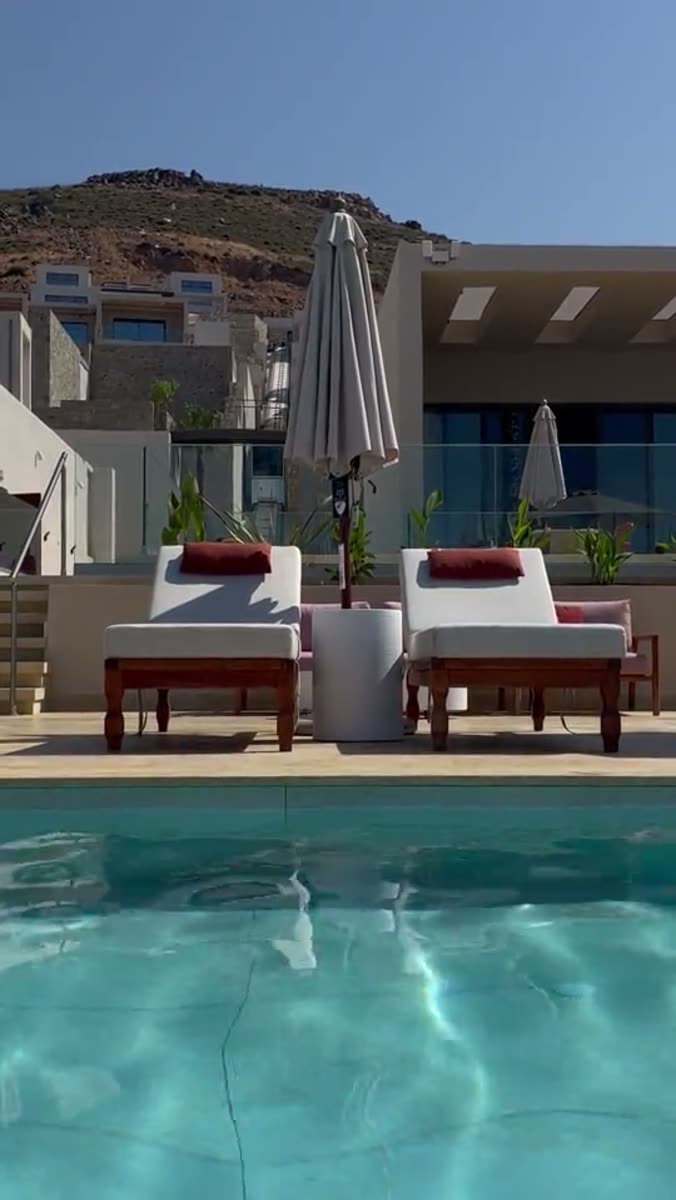
02A camera move is licensed by coverage
Stated so it cannot be misread: a move may only reveal space we hold evidence for, and evidence means a source photograph of that property showing that space. No evidence, no license. An unknown is never a yes. The system fails closed, which is unglamorous and is the only version that survives a tired night before a deadline.
Six moves, and what has to be true before each one is legal
What licenses what| Dimension | What has to be true | Verdict from a single frame |
|---|---|---|
| Forward dolly or push | Something visible for the move to arrive at: an end wall, a doorway, a horizon | Yes. Usually legal. The safest move in a corridor |
| Pull back | What is behind the camera has to be known, which one photograph almost never proves | No. Refused, most of the time |
| Pan or lateral travel | The edge it moves toward has to terminate, or another frame of the same place has to cover what lies past it | Partly. Legal only from named frames |
| Any move that widens an opening | The view through that window or doorway has to have been photographed | No. Refused until somebody stands in the opening and shoots outward |
| Static, with motion inside the frame | Nothing. A curtain, a hand, a light change and a held look are always available | Yes. Always legal, and frequently the better shot |
| A walking subject with a panning camera | Coverage of the ground she walks onto and of everything the pan uncovers | No. Refused unless both are separately licensed |
The half of this that actually earns its keep is the refusal. A refusal that is only a no wastes the client's time and gets argued with. A refusal that names the missing photograph converts into something the owner can walk outside and do in ten minutes, and the shot comes back legal the same afternoon.
The refusal grammar, verbatim
Take itREFUSED: pan-left on lawn-north
reveals: the ground west of the pergola, and whatever stands on it
evidence: none. no source photograph of this property covers it
UNLOCK: one frame looking west from the pergola, at eye height,
and this move becomes legal.Can this shot be generated?
Answer three questions03Scale is its own kill class
We once rendered a property's stone entry feature at roughly eight feet tall, standing over the person beside it, when the real thing is about five. Nothing was hallucinated, every gate we had passed it, and in hospitality the first person to notice is the one who walks past that object every day.
The cause is simple and it does not improve with a better model. A generator has no metric sense. It knows what a stone crest looks like and nothing at all about how tall this one is, so it renders whatever the composition wants. The only fix is to put the number in the room before the render, and to make a human body the ruler.
The error, in feet
Ours, off a delivered frameSee the numbers as a table
| Height in feet | Height |
|---|---|
| What we rendered | 8ft |
| The real object | 5ft |
| The person beside it | 5.4ft |
The provenance marking is the part people skip and it is the part that works. An assumption written as ASSUMED gets corrected by the owner in one second. The same assumption written as a confident number survives all the way into a delivered film. There is a wider version of this failure across categories in why AI ads get the size of things wrong.
04Why is each property a separate brand, even under one owner?
Because a guest is not choosing between the group and another group. They are choosing between these buildings, on one screen, in one evening. Distinctiveness only means anything relative to what a piece appears beside, which is the argument the Ehrenberg-Bass work on distinctive assets makes at much greater length. Two properties that look identical in a feed are buying awareness for each other and paying twice for it.
So we treat properties under one owner exactly as we would treat two competing brands: separate visual languages, separate corpus studies, and a hard rule that a creative may only use its own property's photography. The longer version, including what merging them would genuinely have saved, is in three hotels, one owner, three visual languages, and the decisions a language is actually made of are listed in one visual language per brand.
Five things people assume about hotel video
Flip them05What should a hotel shoot once?
About twenty minutes of deliberate photography unlocks most of the moves a year of reels will ask for. Not pretty photographs. Evidence photographs, taken to prove that space exists, and kept in a folder nobody edits. Do this once and the refusals mostly stop.
The six frames that unlock almost everything
Tick as you go - it remembers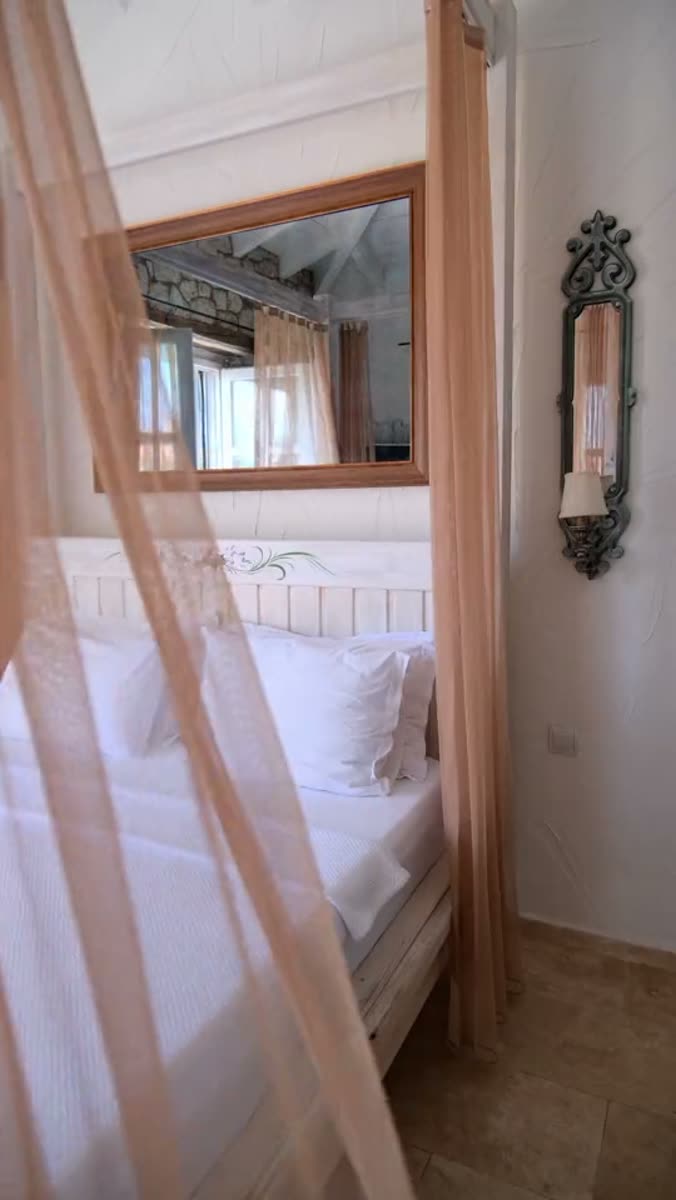
06The content sheet is the thing that gets approved
Nothing renders until an owner has read and approved a paper document, and the document is built to be decided in a few minutes rather than to prove how much work went into it. It opens with what the viewer feels, beat by beat, in emotion words rather than camera words. Then the one question the film poses and the second it is answered. Then the shot table.
Query, paper, approval, and only then a single frame
The gate orderFour columns that make a shot row auditable
Switch between themThe place, not the type of place
A row says which corridor, not corridor. A type is not a location, and the whole question in a building with six similar spaces is which one.
- One named place per row, matching the archive's own label
- One property per film, with no exceptions for a shot that would be perfect
- Interiors and exteriors of the same place are separate rows, because they are separate evidence
Why this move is legal, in one line
The reference photographs by name, and the visible feature that grants the license: the doorway the push arrives at, the wall that terminates the pan, the mirror that proves the ceiling.
This column also records whether the license came from the index or from a person's judgement, so an owner can see which claims were machine-checked.
What we deliberately did not risk
Every move refused in this place, each with the photograph that would unlock it. Clients read this column more carefully than any other, because it is the one that tells them what they are not getting and exactly how to get it.
The real size of anything named
The landmark's real dimension, the on-screen person's height, and the provenance: measured, owner-stated or ASSUMED. Checked at delivery against this row rather than rediscovered by eye.
Spatial truth keeps the film from being a lie. It is not what makes the film good.
the last line of our own hotel runbook
07What this discipline costs, and what it cannot promise
It costs shots. A closed parasol stays closed, a lawn gets a static frame instead of the pan somebody imagined, and a rising establishing move gets replaced by something that happens inside a locked frame. We think that trade is correct for hospitality, and we would not make the same trade for a supplement brand shot on a table.
The tooling is not finished either. About one refusal in ten comes back without naming the frame that would unlock it, which is a gap in our system rather than a gap in anybody's building, and the honest response is to write the missing shot ourselves rather than pretend the move was impossible. We also have no outcome data tying spatial fidelity to bookings. Nobody does, as far as we know.
What is actually stopping your property making more video right now?
These percentages are an illustrative split rather than survey data. The first option is the one we hear most, and it is also the cheapest to fix: a twenty-minute photography walk usually unlocks a year of reels.
What we can point at is the direction of the risk. The IAB surveyed 505 consumers and 104 executives and found advertisers overestimate how positively people feel about AI in advertising by 37 points, 82% against 45%, a gap that has widened. In a category where the audience physically inspects the claim, being wrong about the building is the one error with a receipt attached. The general QA version is in a pre-launch checklist for generated footage, and the paper-first argument is in why we approve paper before anything renders.
Hotel work, cut under these rules
Ours, made this wayThe vocabulary, defined so you can use it in a brief
Search the vocabularyCoverage licenseSpatial
Source photographEvidence
Depth terminusSpatial
Scale anchorScale
Refusal grammarProcess
Content sheetProcess
Questions people actually ask
Open what you needCan you make hotel reels with AI without shooting the property?
Partly, and the limit is worth understanding before you commission anything. Generated material can carry mood, texture, transitions and coverage of spaces you have already photographed. It cannot invent a room and it cannot show a view nobody has recorded. Without photographs of the building, what you get is a beautiful film about a hotel that does not exist.
What do you need from us to start?
Photographs, and more of them than you think, taken to prove space rather than to flatter it. Corridors from both ends, open areas shot in four directions, the view out of every window you want opened on camera, and the real measured height of two or three landmarks. Phone photographs are fine. A folder nobody has retouched is better than a brochure set.
Why can a shot of one of our other properties not be used?
Because it is the one error that passes every check. A hallucinated corridor looks wrong to anybody. A sister property's lawn shown as this one's looks perfect, clears every technical gate, and only fails when a guest arrives. We treat cross-property footage the way we treat a false claim in an ad, which is as an automatic stop.
How long does a hotel reel take?
We hold 72 hours from brief to a first finished cut, and for hotel work the front-loaded part is the archive and the content sheet rather than the render. If the coverage exists, the timeline is normal. If it does not, the honest answer is that a twenty-minute photography session unlocks more than another week of our time would.
Do we have to disclose that a hotel ad used AI?
Platform and advertising rules move and vary by market, so check current policy rather than trusting a blog. The commercial point stands regardless: the IAB found advertisers overestimate consumer positivity toward AI advertising by 37 points. In a category where the customer inspects the claim in person, accuracy protects you more than disclosure language does.
How many reels does a property actually need?
More than one and fewer than a content calendar implies. Motion's data across 550,000 ads shows top accounts and average accounts sharing the same hit rate, with the difference coming from how many genuinely distinct swings get shipped. For a single property the practical answer is a small set that differ on argument and world, not five cuts of the same walk-through.
Every refusal on a hotel shot sheet buys the same thing: the morning a guest pulls that curtain open, the film is still true. The price is usually one photograph, taken by somebody standing where nobody thought to stand.
Where the numbers came from
- IAB. The AI Gap Widens - 505 consumers and 104 executives: the gap between how positively advertisers assume people feel about AI advertising and how they actually feel
- Ehrenberg-Bass Institute for Marketing Science. Institute research on distinctive brand assets - the body of work behind distinctiveness being defined against a competitive context rather than in isolation
- Motion. Creative Benchmarks 2026: winners are rare - 550,000+ ads and roughly $1.3bn of spend, for the cadence figures
Every figure above links to the place it was published. Numbers marked as ours are measured inside this studio and we say so where they appear. We do not print a statistic we cannot point at.
Send a link. Get one finished reel back.
Send your property's site and whatever photographs you already have. You get one finished cut back, free, yours to run whether or not we ever work together, with every camera move in it licensed by a frame you supplied.
Replies within a day. Ad within three.