When you should still hire a human creator
We make AI UGC for a living and there are five briefs we tell people to take to a real person instead. Here they are, with the mechanism behind each, and the cases where synthetic footage genuinely wins.
What is in here
Hire a person when the argument of the ad depends on a person. A testimonial with something genuinely at stake, a face the audience already trusts, a demonstration of behavior no model has ever seen, a campaign where the creator's own audience is the media buy, and any regulated claim that needs an identifiable speaker. Those five are not cost decisions. Volume, variants, and the shots you physically cannot get are where synthetic footage earns its place. We sell the second thing and we still send people to the first.
- The five briefs where a real person is the product rather than a line item
- Why the most common creator hook in the category is the worst one to hand a synthetic performer
- What went wrong the last time we directed an AI performer, and whose fault it turned out to be
- The cases where AI UGC genuinely wins, so this is a decision rather than a lecture
- A three-question router that will sometimes tell you to go and hire a person
Four numbers from our own logs
Ours, counted01When is a real creator not replaceable?
When the claim is about the person. A testimonial is somebody putting their name behind an outcome, and the name is the mechanism. A synthetic performer has no name, no purchase history and nothing to lose, so what you get is the shape of a testimonial with the load-bearing part removed. Casting cannot be simulated when the casting is the argument.
Nine jobs, and who can actually do them
Filled in honestly| Dimension | A real creator | AI UGC |
|---|---|---|
| A testimonial with something at stake | Yes. Yes | No. No, and it should not be attempted |
| A face the audience already trusts | Yes. Yes | No. No. Familiarity takes years |
| The creator's own audience is part of the buy | Yes. Yes, that is the product | No. No audience attached |
| A regulated claim needing an identifiable speaker | Yes. Yes, with your counsel | No. No |
| Showing the product do something surprising | Yes. Yes, if it is filmed | No. A model can only reproduce what it has seen |
| A specific person's point of view, as the idea | Yes. Yes | No. No |
| Forty versions of one idea, this week | No. Not at any sane price | Yes. Yes, and cheaply |
| A room, a season or a country you cannot reach | No. Flights and a schedule | Yes. Yes |
| A product too fragile, costly or unreleased to ship | No. You have to send it to somebody | Yes. Yes |
Notice that the first six rows have nothing to do with picture quality. They are about who is speaking and what happens to them if the product is bad. That is the axis the format argument keeps missing. A synthetic film can be beautiful and still be making a claim nobody is standing behind.
The row that surprises people is the fifth one. A model can only reproduce behavior it has seen a great deal of, which means a product doing something genuinely unusual is exactly what it cannot show you. If your differentiator is a movement, a material or a mechanism that does not exist elsewhere, a phone in a kitchen beats every generator available. The related problem, hands making real contact with a real object, has its own piece in hands, products and the contact problem.
What hiring a person actually takes, start to finish
The creator route, honestly02What you are actually buying when you buy a face
A creator's credibility is not in the lighting. It sits in the fact that they can be wrong in public, in front of people who will remember. That is expensive to build and it does not transfer to a rendered person, however good the render is. It is also, awkwardly, the exact thing the most popular creator format runs on.
We read 64 videos from one competitor's creator feed, file by file. Twenty-six of them open on a first-person confession, 40.6% of the set and the single most used opener in it. It is the crowded hook and it is also the one a synthetic performer handles worst, because a confession works through a relationship and there is nobody there to have one with.
The most common creator hook in the category is the one a synthetic performer is worst at. Its mechanism is a relationship.
Sutra Haus hook doctrine, on the confession opener
The four takes we killed
Four takes from one AI-influencer shoot died in a single review, all of them for performed expression with no cause anywhere in the frame, and the fault was our direction rather than the model: the full account, and the expression board that came out of it, is in keeping one performer continuous across six shots.
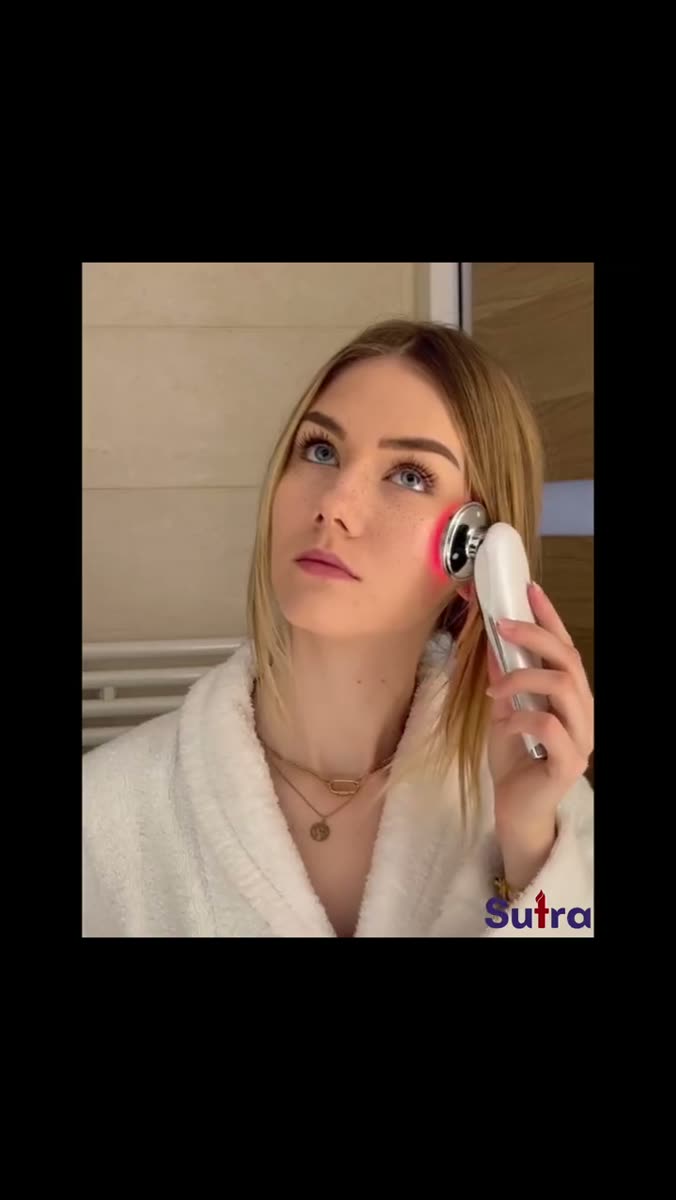
There is a real contradiction in the evidence about polish, and it resolves once you split it in two. One body of work says the least produced files read as the most credible, and that studio lighting announces a commercial inside the first second. Another says premium categories lose money the moment the product looks cheap. Both are true, because rawness is a property of the performance and polish is a property of the object. Handheld, unscripted, imperfectly framed, around a product photographed properly. A synthetic performer does the second half well and fights you on the first.
03Where AI UGC genuinely wins
The honest case for synthetic footage is not that it looks as good. It is that it removes the two things that make creator work slow: a schedule and a shipment. That changes what you are able to attempt, which is a different argument from cost and a much better one. The cost side, with the prices we could verify, sits in what AI ads, creators and agencies actually cost.
Where we would use AI UGC without hesitating
Four casesOne idea, many executions
You have a hook that works and you need it in eleven versions before the weekend. A creator shoot cannot do that, and asking eleven creators for it gets you eleven different ideas, which is a different test.
- Same story, different openers, different rooms, different lengths
- Kills the temptation to run one creative until it is exhausted
- Costs almost nothing per extra version once the story is locked
A season, a country, a room that is booked
Hotel and travel work lives here. So does anything seasonal that you needed in February and are briefing in September. A creator can only film what is in front of them this week.
- Weather, time of day, and light you cannot wait for
- Locations where filming permission is slow or impossible
- Every version of a room that a real shoot would need three days to cover
Unreleased, fragile, expensive or regulated
Sending fifty units to fifty creators is a real cost and a real leak risk. If the product is not public yet, it is not a risk you can take at all.
- Pre-launch, where a leak is worse than a weak ad
- High-value items that a creator would have to insure
- Categories where the product cannot legally be handed to a stranger
The same argument, in nine places
Localizing a creator campaign means casting it again. Localizing a synthetic one means changing the script and the room, and keeping the structure that already worked.
- One tested structure, many markets
- Faster than re-briefing a new creator in each country
- Still needs a native reader on the script, every time
If you are hiring a person, brief them like this
Tick as you go - it remembers04So which one does your brief need?
Three questions, answered honestly, settle most briefs. The tree below has an ending that says hire a person, and it is not decorative. Briefs that reach us land there often enough that we wrote the ending before we wrote the rest of it.
Person, camera, or generation
Answer three questions05The briefs we turn down
Three, and they come up often enough to be worth writing down. A testimonial in the voice of a person who does not exist. A health, income or outcome claim behind a synthetic face. And an ad whose entire idea is that it looks like a real person filmed it in their kitchen, where the whole value of the format is that a real person did.
Disclosure is a separate question from any of that and it is moving. Meta labels AI content as AI info, wording it changed in July 2024, and platform rules keep shifting underneath everyone. We treat the current policy page as the source and check it per campaign rather than per year, which is the same advice we would give you. There is more on the practical side of this in do you have to disclose AI-generated ads.
Four things people say about real UGC versus AI UGC
Flip themThe test we run internally is one sentence long. Read the ad's main claim out loud and ask who is making it. If the answer is the brand, generation is fine and the person on screen is a presenter. If the answer is the person on screen, then you need a person on screen. It takes ten seconds and it has settled more arguments than any deck we have written.
Four films where the person on screen is a presenter, not a witness
Ours, both waysFive words that decide the contract
Search itBuyoutContract
WhitelistingContract
Creator registerCraft
Expression boardProcess
Parasocial trustMechanism
Questions people actually ask
Open what you needWhen should you use real creator UGC instead of AI UGC?
When the ad's argument depends on the person: a testimonial with real stakes, a face the audience already trusts, a creator whose own audience is part of the buy, a regulated claim needing an identifiable speaker, or a demonstration of something a model has never seen. Outside those, the choice is about volume, speed and what you can physically film, and synthetic footage usually wins on all three.
Does AI UGC ever outperform real human UGC?
We have no controlled test that would answer it, and we have not found one with a stated sample either. What we can say is structural: AI UGC lets you run many distinct swings in the time a creator shoot takes to schedule, and the number of distinct swings is the lever most brands are under-using. That is an argument about cadence, not about which format is better.
Is AI UGC worth it?
It is worth it when you need volume, coverage you cannot film, or markets you cannot cast for. It is not worth it when you need somebody to vouch for the product. Buying it as a cheaper creator is where people get burned, because they end up with a testimonial nobody is standing behind and wonder why it reads hollow.
Can I use an AI actor for a testimonial?
We do not build them and we would advise against it, on two grounds. Practically, a testimonial works because a named person is exposed to being wrong, and that mechanism is gone. Legally, endorsement and substantiation rules are real and they vary by market and category. Ask your counsel about your category before anybody writes the script, not after.
Do I have to say an ad was made with AI?
It depends on your platform, your market and your category, and the rules have moved repeatedly. Meta labels AI content as AI info, wording it changed in July 2024. Treat every answer you read, this one included, as out of date and open the current policy page before the campaign ships.
Can you mix a real creator with AI footage in one ad?
That is most of the good work. The person's face and voice carry the claim; generated footage supplies the coverage, the rooms and the variants nobody would pay to shoot. The rule we hold to is that anything the viewer could verify with their own hands stays real, and their footage never runs raw.
Almost every argument about this format is really an argument about cost, and it is being had in the wrong place. What decides it is whether the ad you have written requires somebody to be standing behind it, because if it does, no render is going to stand there for you.
Where the numbers came from
- Insense. Insense pricing - checked 1 September 2026: UGC campaigns start at $100 per video, creator payments separate from the platform subscription
- Trend. Trend UGC pricing - checked 1 September 2026: creator credits $9.16 each, a creator costs 20 to 60 credits and delivers 2 videos
- Meta. Meta's approach to labeling AI-generated content - the label became AI info in July 2024; policy pages move, so check the current one before you rely on it
Every figure above links to the place it was published. Numbers marked as ours are measured inside this studio and we say so where they appear. We do not print a statistic we cannot point at.
Send the brief. We will tell you if it needs a person.
Send a link to your product and the thing you are trying to say. If it needs a real creator we will say so and tell you what to brief them on. If it does not, you get one finished ad back, free, yours to run either way.
Replies within a day. Ad within three.