What kinds of products AI UGC works for
Not a list of categories. A taxonomy by what you are asking the camera to do, because that is what decides it. Eight classes, the tell that gives each one away, and a scoring quiz you can run on your own product in two minutes.
What is in here
Category is the wrong axis. What decides it is the job you give the camera. Products that sit still and look good work. Products whose whole value is a texture changing, a pour, a stretch or a fit are hard. Anything with specular sparkle or with packaging text that has to be readable is where we still lose frames. And the class that works better than anybody expects is the one whose benefit is invisible, because a benefit nobody can see was never going to be filmed literally anyway.
- Eight classes sorted by what the camera is asked to do, not by industry
- The frame-level tell that gives away each of the four hard ones
- Why food deserves its own category, and the part of it we openly cannot do
- A two-minute scoring quiz you can run on your own product
- What a wellness patch, a hotel, a beauty device, fashion, jewelry and homeware each taught us
Six things we have pointed a generated camera at
Ours, six categories01What decides whether AI UGC works for a product?
One question: what is the camera being asked to do. A generator is very good at showing you an object in a room and very bad at showing you an event, because an event requires geometry the camera never recorded. Sort your product by the job rather than by the shelf it sits on, and the answer falls out.
Eight classes, and the tell that gives each away
Sorted by the job| Dimension | Verdict | The tell, if it goes wrong |
|---|---|---|
| Sits still and looks good | Yes. Works | Nothing. This is the class the format was built for |
| Benefit is invisible and has to be dramatized | Yes. Works well | You are not asking for realism, so realism cannot break |
| A texture, a pour, a stretch or a split | No. Hard | The material behaves like no material anyone has handled |
| Worn on a body | Partly. Hard, improving | Fabric that hangs from nowhere, and a fit that changes between cuts |
| Used in the hand | Partly. Depends on the grip | Contact. Fingers rest on the object rather than holding it |
| Food | Partly. Its own category | Appetite. It reads as texture rather than as something you want |
| Sparkle, polish, glass or stones | No. Still failing | Highlights crawl and pop, as if the light restarts each frame |
| Packaging text that has to be readable | No. Check every frame | Letters that are almost words. Nobody reads them, everybody notices |
Most products are two or three of these at once, which is why category advice is useless. A serum in a glass dropper is a still object, a pour, a piece of readable packaging and a specular surface. A yoga mat is a still object and a texture. The first will fight you for a week and the second is done on Tuesday.
02The four hard classes, and what breaks in each
A texture, a pour or a stretch
We once killed a photographed loaf pulling into two halves that had passed every automated check we ran, because the craft was fine and the event was invented, and a viewer catches an invented event faster than a soft shadow. The kill is told properly in why AI ads look fake.
Worn on a body
Fit is the product in fashion, and fit is what drifts. The other failure is subtler and cost us three shots. We cut three beats out of one lookbook take that had hard cuts at 3.567 and 9.433 seconds inside it, so three of our shots straddled a cut nobody had noticed. In the same pass, a clip we had labeled a white eyelet macro turned out to be a defocused body wipe. Detect the cuts inside your sources before you cut across them.
Used in the hand
Contact is the problem, not fingers. A generated hand can have five fingers, correct nails and plausible skin, and still rest on an object instead of gripping it, because pressure has to be implied and the model has no reason to imply it. Watch where skin meets surface and ask whether anything is being held. There is a whole piece on this in hands, products and the contact problem.
Three hard things in one frame
Tap the points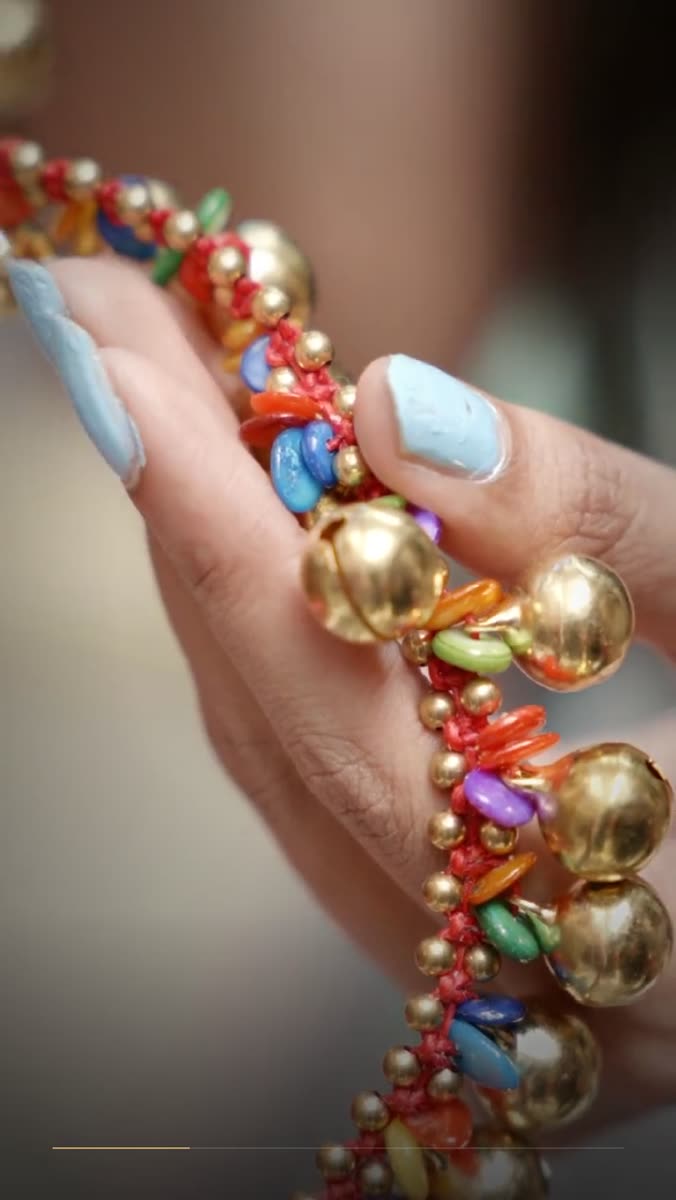
Sparkle, and readable packaging
Jewelry, or jewellery if you are searching from the UK, is the class where we still lose most often, and it is not the metal. It is the highlight. A specular point depends on a light, a surface angle and a viewpoint holding a fixed relationship, and that relationship is what a generated sequence does not keep. There is more on it in where AI video still fails at sparkle.
Four numbers we now build against
Ours, measuredPackaging text is the measurable version of the same problem. A beauty film we made used stock footage carrying real bottle labels. Measured on delivered frames, at 1.43 times magnification the near bottle reads as two lines of product copy; at 1.15 it sits at the threshold; at 1.06 it is a pale block with no glyph. A competitor's product name legible while you sell an invented brand does not ship, so every window on that clip was capped at 1.06. One magnification means one scale, so that clip now supplies exactly one beat.
Constraints are allowed to cost you shots. The cut changed. The rule did not.
Our own note on the film that lost its range shot
Four assumptions about product categories, and what we found instead
Flip them03Does AI UGC work for food?
Food is its own category and we are careful with it. A generated plate reads as texture rather than as appetite, and appetite is the entire job. The failure is not visual accuracy; it is that nothing in the frame is making you hungry, which is a different sense being addressed by the same picture.
We should also say what we do not know. Searching our own doctrine for findings about appetite, smell, warmth or steam returns nothing. Every sensory finding we hold is tactile, taken from patches, fabric and skin. So food advice from us is reasoning rather than evidence, and we mark it that way.
04The class that works better than people expect
Supplements, sleep aids, patches, anything whose benefit happens inside a body. People assume this is the hardest category and it is one of the easiest, because you were never going to film the benefit anyway. Nobody can photograph better sleep. So the film has to argue by metaphor or by prop, and a generator is a good metaphor engine.
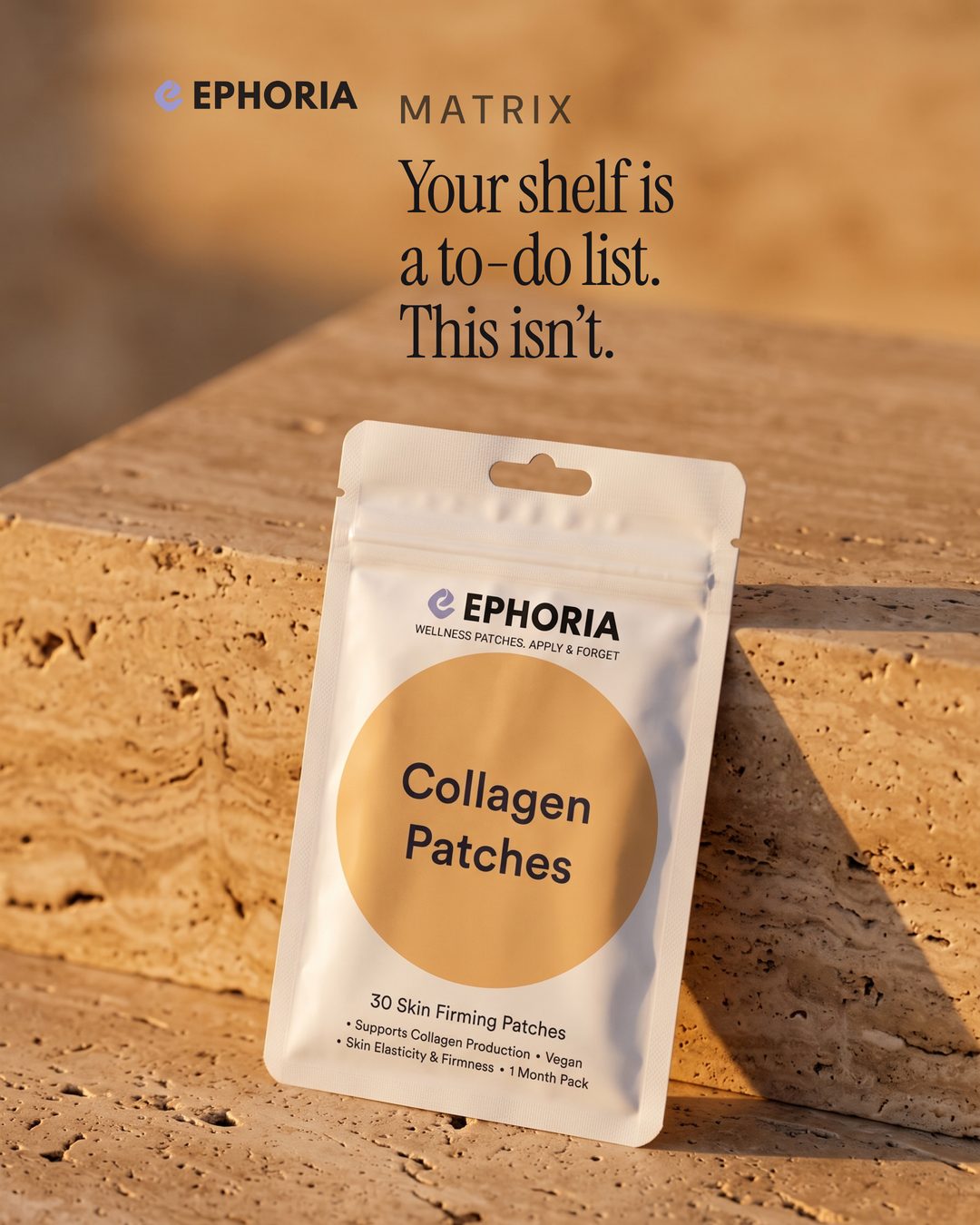
The prop that argued the whole format
The best example in our own corpus cost nothing to make: a four-compartment pill organizer, filled with adhesive patches instead of pills. It argues the entire format change with no sentence at all. Props argue without asserting, which also keeps you out of the claims trouble that this category attracts. The rule that governs it is the same one from the bread: if the treatment is declared and stylized, it can do things a photograph cannot, because it never claimed to be a photograph. The exception in this category is a testimonial, which needs a person for reasons that have nothing to do with the camera: that argument is in when you should still hire a human creator.
05Score your own product
Six questions, honestly answered. The score is not a verdict, it is a map of which frames will need real photography under them. A low score does not mean do not use generation; it means film the twenty seconds that carry the hard thing and build everything else. What each of those routes costs, with the prices we could verify, is in what AI ads, creators and agencies actually cost.
Will AI UGC work for this product?
Score it06Sort by the job, not the shelf
Categories we have shipped, and the lesson each one left
Five panelsInvisible benefit, so argue with props
Our own house brand, and the category where generation earns the most. Nothing about the product can be photographed doing its job, so the film has to make an argument instead of a demonstration.
The strongest thing we made for it was a prop, not a shot: an ordinary object doing the wrong job. It states the format change without a claim, which in a category full of regulated language is worth more than any adjective.
- Props argue without asserting
- Declared, stylized treatment is legal where faked realism is not
- The claim risk is higher than the craft risk
Real spaces can still lie
A property's entry crest was rendered at roughly eight feet tall, taller than the person standing beside it. The real one is about five. The space was entirely real and the film still lied, which is a different failure from a hallucination and a harder one to catch, because everybody is looking at the light.
Every shot that names a landmark now carries that landmark's real size and the person's height, marked as measured, owner-stated or assumed. An unmarked guess is the failure mode.
- Scale is its own kill class
- A camera move is only allowed if you hold evidence of what it would reveal
- State the relationship, not the number: chest-to-eye height beside her
Read the background before you scale a shot
The film that taught us to measure label legibility on delivered frames rather than on the timeline. A competitor's product name became readable at higher magnification, so the magnification was capped, and capping it cost the film a shot it had been built around.
Devices otherwise sit in the easy half of this list: a still object with a soft finish, used in a normal way, in a bathroom that does not need to be anywhere in particular.
- Check every window at its delivered scale, not at 100%
- One magnification means one beat, so a capped clip stops being reusable
- Faces demonstrating are fine, faces testifying are not
The two hardest classes, for opposite reasons
Fashion is hard because fit is the product and fit drifts between cuts. Jewelry is hard because a highlight is a relationship between light, surface and viewpoint, and that relationship is exactly what a sequence fails to hold.
Both are where our own demo work leans hardest on real photography underneath. If a customer will hold the object, the object should have been photographed.
- Stock and generated clips are often compilations, so scene-detect your sources
- Look at the frame you think you are using, not the one you named it
- Real product photography under generated coverage, every time
Appetite and effort, both under-served
Food asks for appetite and gets texture. Our doctrine has nothing to say about steam, warmth or smell, and we say so rather than improvising a rule.
Fitness has a related problem: a viewer knows exactly what effort looks like, because they have felt it. A body under load is one of the least forgiving things you can generate, and the fix is usually to film the effort and generate the world around it.
- In a making story, the finished thing comes last
- Effort and appetite are both judged by a sense the picture cannot address directly
- This is the honest gap in our own knowledge
Five checks to run on any generated product cut
Tick as you go - it remembersThe same method against four different jobs
Ours, four classesQuestions people actually ask
Open what you needWhat types of products work best with AI UGC ads?
Products that sit still and look good, and products whose benefit is invisible and has to be dramatized. Both avoid the thing generation is worst at, which is performing a physical event convincingly. Matte or soft surfaces, no packaging copy that has to be readable, and a use that does not depend on grip or fit will get you the cleanest result.
Does AI UGC work for supplements?
It works well for the ritual and sensory registers and badly for testimonial-shaped creative, which is the same split we draw everywhere. On the camera side it is one of the easier classes here, because you were never going to film the benefit. The risk is claims rather than craft, and the compliance half of the answer is in what gets a supplement ad rejected.
Does AI UGC work for food?
Partly, and we are honest about the limits. Generated food reads as texture rather than as appetite, which is the whole job. Our own doctrine has no findings about steam, warmth or smell, so anything we say about food is reasoning rather than evidence. The one rule we trust: in a making story, the finished dish arrives last.
Can AI UGC handle fashion and clothing?
It is getting better and it is still hard, because fit is the product and fit drifts between cuts. Use real photography of the actual garment for anything a buyer would use to judge the fit, and generation for the world around it. Also check whether your source clips have hidden cuts inside them before you cut across one.
Why do AI ads get jewelry wrong?
The metal is fine. The highlight is not. A specular point is a fixed relationship between a light, a surface angle and a viewpoint, and a generated sequence does not hold that relationship steady, so the bright point crawls or pops between frames. Add tiny repeated structure like links and settings and the error rate goes up again.
What should I do if my product scores badly?
Shoot the hard part and generate the rest. Twenty seconds of the pour, the fit or the sparkle on any phone will carry a whole film, and everything else can be built. That is cheaper than a full creator shoot, which starts at about $100 a video on the platforms that publish a floor, and it fixes the exact frames that would have failed.
The reason people get this decision wrong is that they ask whether AI can make an ad for their category, and the camera has never cared about categories. It cares whether the thing in front of it is holding still or doing something. Sort your product that way, film the doing, and generate everything else.
Where the numbers came from
- Insense. Insense pricing - checked 1 September 2026: UGC campaigns start at $100 per video, creator payments separate from the platform subscription
- Trend. Trend UGC pricing - checked 1 September 2026: creator credits $9.16 each, a creator costs 20 to 60 credits and delivers 2 videos
Every figure above links to the place it was published. Numbers marked as ours are measured inside this studio and we say so where they appear. We do not print a statistic we cannot point at.
Send a link to your product. We will tell you which frames need a camera.
One finished ad back, free, built from your own product, inside three days. If your product is in one of the hard classes we will say which shots we would film rather than generate, and why. Yours to run whether or not we ever work together.
Replies within a day. Ad within three.